
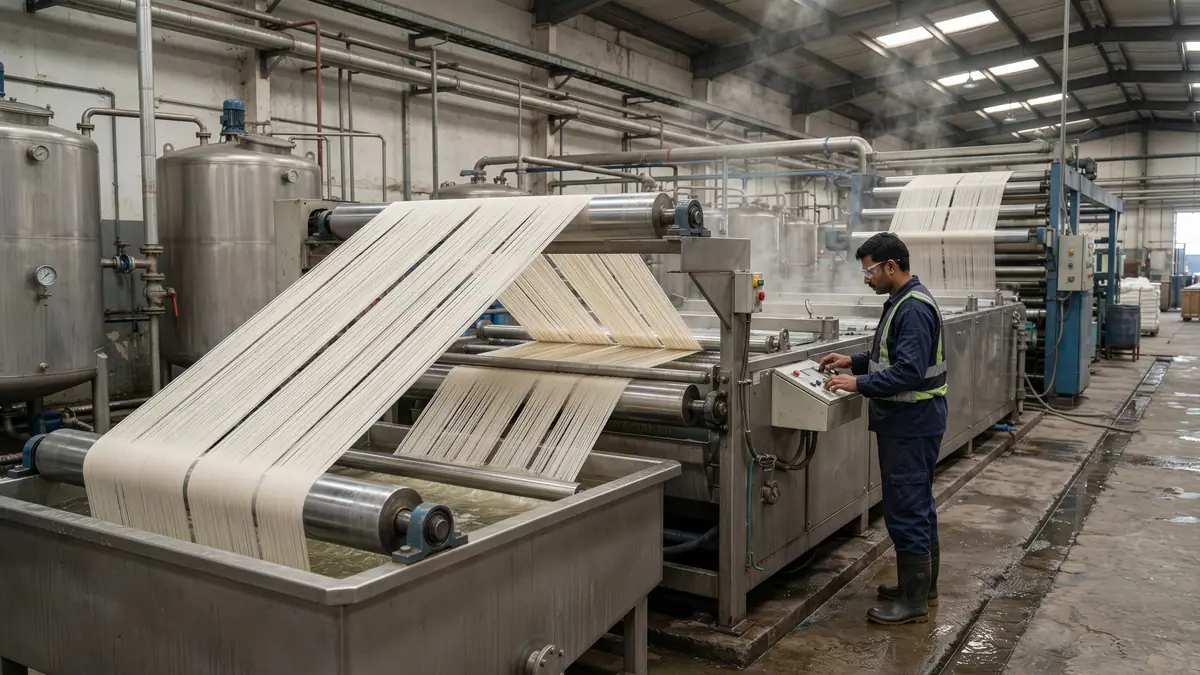
Developed in 1844 by John Mercer, mercerization remains one of the most valuable chemical-mechanical finishing processes in the textile industry. If you have ever noticed cotton yarn or fabric that has a silk-like shine, exceptionally vivid colors, and a smooth, pill-resistant surface, you are looking at mercerized cotton.
How Yarn Mercerization Works
During mercerization, cotton yarn is treated under controlled tension with a concentrated caustic soda (sodium hydroxide) solution at a specific temperature, followed by thorough washing and neutralization:
- Fiber Swelling: Under a microscope, raw cotton fibers look like flat, twisted ribbons. Caustic soda causes the cellulose to swell into a smooth, round, rod-like cross-section.
- Tension Application: Keeping the yarn stretched prevents shrinkage and aligns the internal cellulose molecules.
- Neutralization: Acid rinsing removes residual alkali, locking the fibers permanently into their new cylindrical shape.
5 Major Benefits of Mercerized Cotton Yarn
- Permanent Silk-Like Luster: Round fibers reflect light evenly, giving the yarn a natural, lasting sheen that does not wash away.
- 20–30% Higher Tensile Strength: Molecular alignment reinforces weak points along the cotton fiber, reducing breakage during weaving and sewing.
- Deeper, Brighter Dye Uptake: Mercerized cotton absorbs up to 25% more dye than unmercerized cotton, producing richer blacks, navies, and vibrant reds while reducing dye consumption.
- Dimensional Stability: Pre-shrinking during mercerization minimizes garment shrinkage after consumer laundering.
- Reduced Pilling & Hairiness: Smooth fibers resist fuzzing, keeping finished garments looking new longer.
Double Mercerization vs. Single Mercerization
For ultra-luxury shirting, fine knitwear, and premium embroidery threads, manufacturers use double mercerization—mercerizing the yarn first and then mercerizing the finished fabric again for maximum brilliance and softness.
Frequently Asked Questions
Q: Does mercerized cotton lose its breathability?
No. Mercerized cotton remains 100% natural cellulose—in fact, its moisture absorbency improves slightly compared to untreated cotton.
Q: Is mercerized cotton good for embroidery and crochet?
Yes, it is the gold standard for embroidery, crochet, and high-end stitching because it glides smoothly, holds intricate stitch definition, and showcases vibrant colors.