
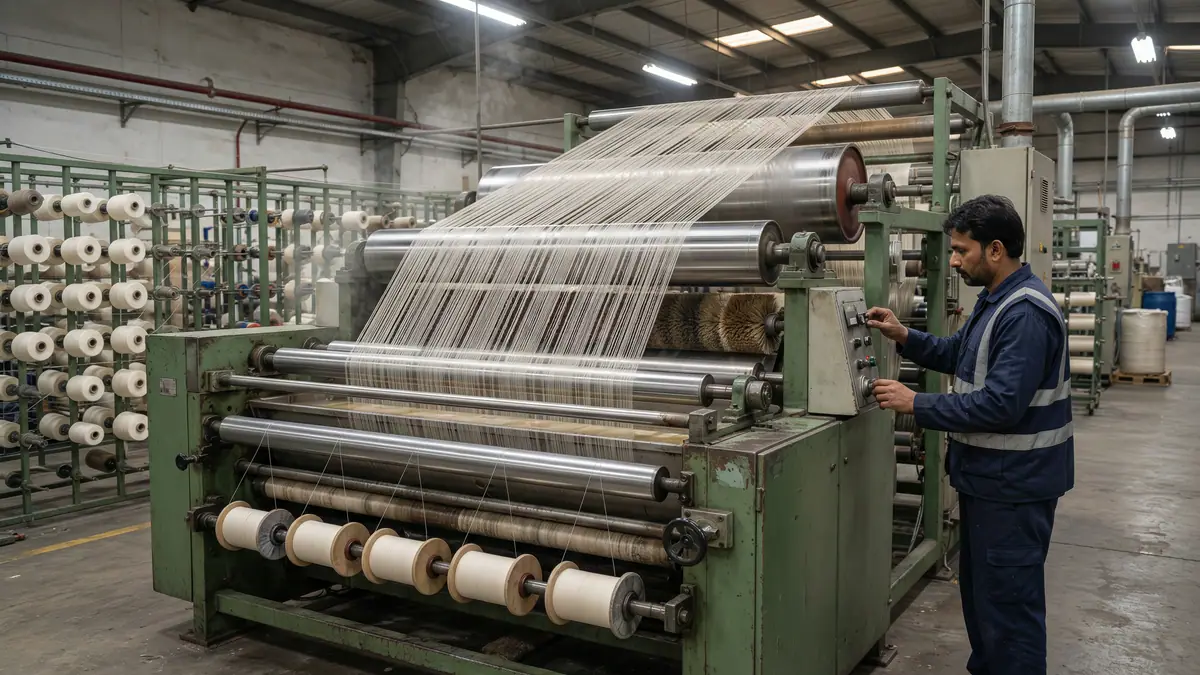
Standard cotton yarn is soft and breathable, but when subjected to the extreme friction of high-speed industrial sewing machines or heavy materials like leather and canvas, untreated fibers can fray, snap, or shed lint. Yarn glazing is the specialized finishing process that solves this problem—turning ordinary cotton yarn into a sleek, glossy, heavy-duty thread.
How the Yarn Glazing Process Works
Glazing is typically performed on bleached or dyed multi-ply cotton yarn. The process involves three controlled stages:
- Immersion: The yarn passes through a heated bath containing a carefully formulated glazing compound—usually a blend of natural waxes, starches, and specialized binding agents.
- Brushing & Polishing: While still damp, the coated yarn runs over high-speed rotating horsehair or nylon brushes. These brushes lay down protruding surface fibers (hairiness) and polish the coating evenly around the strand.
- Heat Drying: The yarn passes over heated rollers or chambers that cure the coating, locking in a smooth, lustrous finish.
Key Benefits of Glazed Yarn
- Exceptional Abrasion Resistance: The protective outer coat shields the cotton core from needle heat and friction against dense fabrics.
- Zero Tangling & Knot-Free Stitching: The smooth surface glides effortlessly through sewing machine tension discs and needles without snarling.
- Increased Tensile Strength: Binding stray surface fibers tightly into the main body slightly boosts breaking strength and dimensional stability.
- Silk-Like Sheen: Glazing gives cotton thread a crisp, polished appearance prized in upholstery and decorative topstitching.
Top Industrial Applications
Glazed cotton yarn is indispensable in sectors where durability and clean seams are non-negotiable:
- Leather Goods & Footwear: Shoes, belts, handbags, and saddlery.
- Heavy Apparel: Denim jeans, workwear, and outerwear.
- Home & Automotive Textiles: Mattresses, canvas tents, upholstery, and quilting.
- Bookbinding & Packaging: High-strength stitching and tying twines.
Frequently Asked Questions
Q: Does glazing make cotton yarn stiff?
Glazing gives the thread a firmer, crisper hand-feel ("wire-like" body), which prevents looping and kinking during stitching while remaining flexible enough for tight seams.
Q: Can glazed yarn be dyed after glazing?
No. Because the wax and starch coating acts as a barrier, dyeing must always be completed before the glazing process.