In textile manufacturing, color is often the first thing a customer notices—and the first thing that reveals poor quality if it fades or bleeds. Unlike piece dyeing (where finished fabric is dyed), yarn dyeing colors the fibers before they are woven, knitted, or stitched. This produces deeper color penetration, richer tones, and unmatched shade uniformity across complex patterns like stripes, plaids, and jacquards.
Why Yarn Dyeing Outperforms Fabric Dyeing
When dye is applied directly to the yarn, the pigment bonds thoroughly with the core of every strand. This provides three major advantages for garment manufacturers and industrial buyers:
- Superior Color Fastness: Dyed yarn resists washing, rubbing, UV light, and perspiration far better than surface-dyed fabrics.
- Design Versatility: Weavers and knitters can combine multiple dyed yarn cones to create intricate multi-colored patterns without printing.
- Batch-to-Batch Consistency: Automated dosing and precision temperature control ensure repeat orders match the exact original shade.
Primary Yarn Dyeing Methods
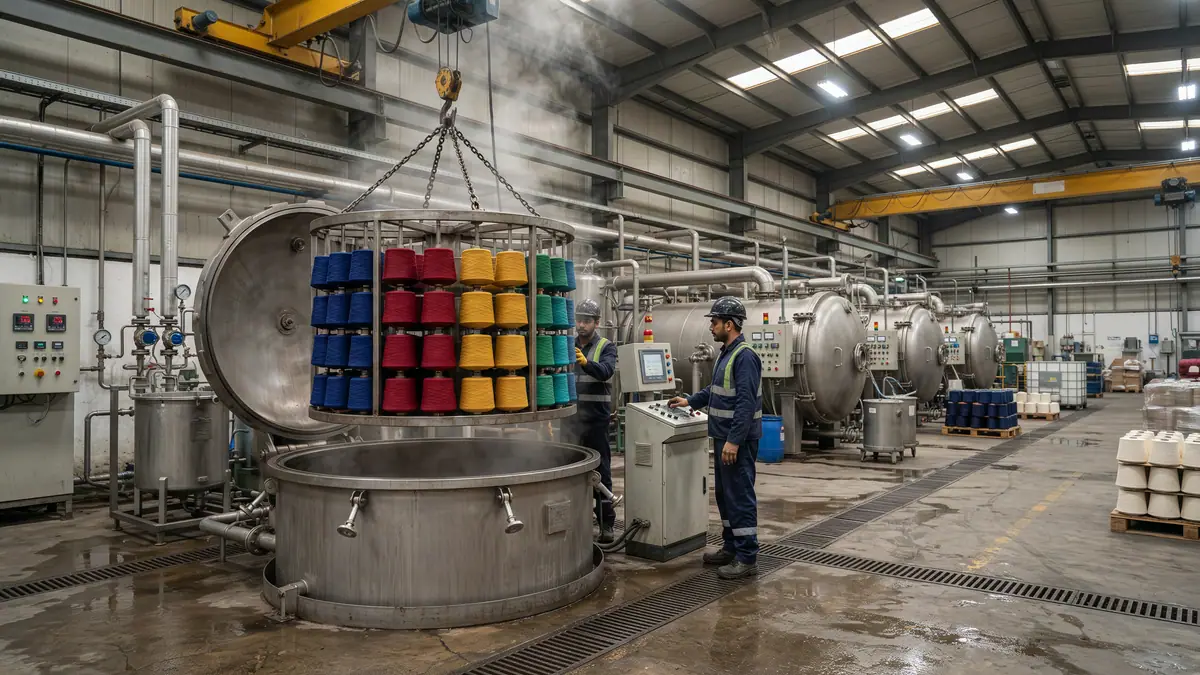
- Package Dyeing: Yarn is wound onto perforated cones or tubes and loaded into pressurized dyeing vessels. Dye liquor is forced through the yarn from inside-out and outside-in, guaranteeing even saturation. This is the industry standard for high-volume cotton and polyester yarns.
- Hank (Skein) Dyeing: Loosely wound hanks of yarn are submerged in dye baths. This method preserves yarn loft and softness, making it ideal for delicate or bulky yarns.
- Space Dyeing: Multiple colors are applied along the length of a single yarn strand to create speckled or multicolor effects.
Quality Control in Modern Dye Houses
At a professional processing facility like ORAAN Industry, dyeing is backed by strict laboratory standards:
- Spectrophotometer Shade Matching: Digital color analysis eliminates human error and keeps Delta-E tolerances tight.
- Water & pH Management: Softened water and balanced pH levels prevent patchy dyeing and fiber damage.
- Eco-Friendly Dyes: Using AZO-free reactive and vat dyes ensures compliance with international export and sustainability standards.
Frequently Asked Questions
Q: Which dye is best for 100% cotton yarn?
Reactive dyes are the most popular choice for cotton yarn because they form a covalent bond with cellulose fibers, offering bright shades and excellent wash fastness.
Q: How do you prevent color bleeding in dark shades?
Thorough hot-and-cold after-washing, soaping, and applying a dye-fixing agent lock unbonded pigment out of the yarn before winding.