
Modern industrial sewing machines operate at speeds exceeding 5,000 stitches per minute, pushing needle temperatures past 300°C (572°F). At these speeds, friction is the ultimate enemy of yarn. Without proper lubrication and conditioning, even high-strength thread will melt, scorch, fray, or snap.
What Is Yarn Lubrication?
Lubrication applies a microscopic, evenly distributed layer of specialized finishing oil, silicone emulsion, or paraffin wax onto the yarn surface during final winding or in a finishing bath.
- For Sewing Threads: Silicone-based lubricants reduce metal-to-thread friction, insulate the thread from extreme needle heat, and ensure smooth loop formation for clean, balanced stitches.
- For Knitting Yarns: Solid paraffin waxing rings mounted on winding machines coat the yarn lightly so it glides through knitting needles smoothly, preventing dropped stitches and needle wear.
What Is Yarn Conditioning (Steam Setting)?
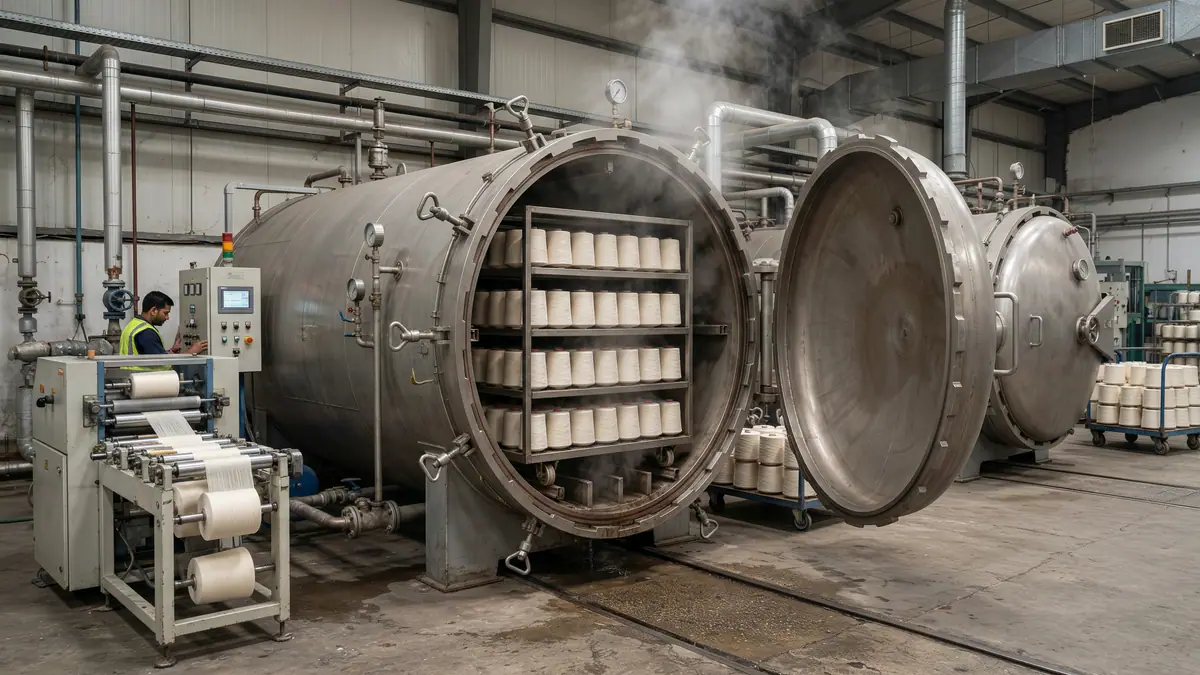
After twisting and winding, yarn holds internal stress and can become overly dry. Vacuum steam conditioning places yarn cones in a sealed chamber where controlled steam and moisture penetrate the core:
- Twist Setting: Relaxes internal torque so the yarn stops curling or snarling during unwinding.
- Moisture Regain: Restores cotton's natural moisture balance (around 7.5–8.5%), which actually increases cotton's tensile strength and flexibility while eliminating static electricity.
Signs of Properly Lubricated & Conditioned Yarn
- Zero skipped stitches or thread melting on high-speed machines.
- Minimal lint and dust buildup around tension discs.
- Smooth, uniform unwinding straight off the cone with no snarls.
Frequently Asked Questions
Q: Does yarn lubricant leave stains on light-colored fabrics?
High-grade textile lubricants are non-staining, clear, and applied at tightly controlled pick-up percentages (typically 2–5% for sewing threads) so they never spot or discolor garments.
Q: Why does dry cotton yarn break more often?
Unlike synthetic fibers, cotton becomes stronger when it holds its natural moisture content. Over-dried cotton becomes brittle and builds up static, increasing breakage rates.